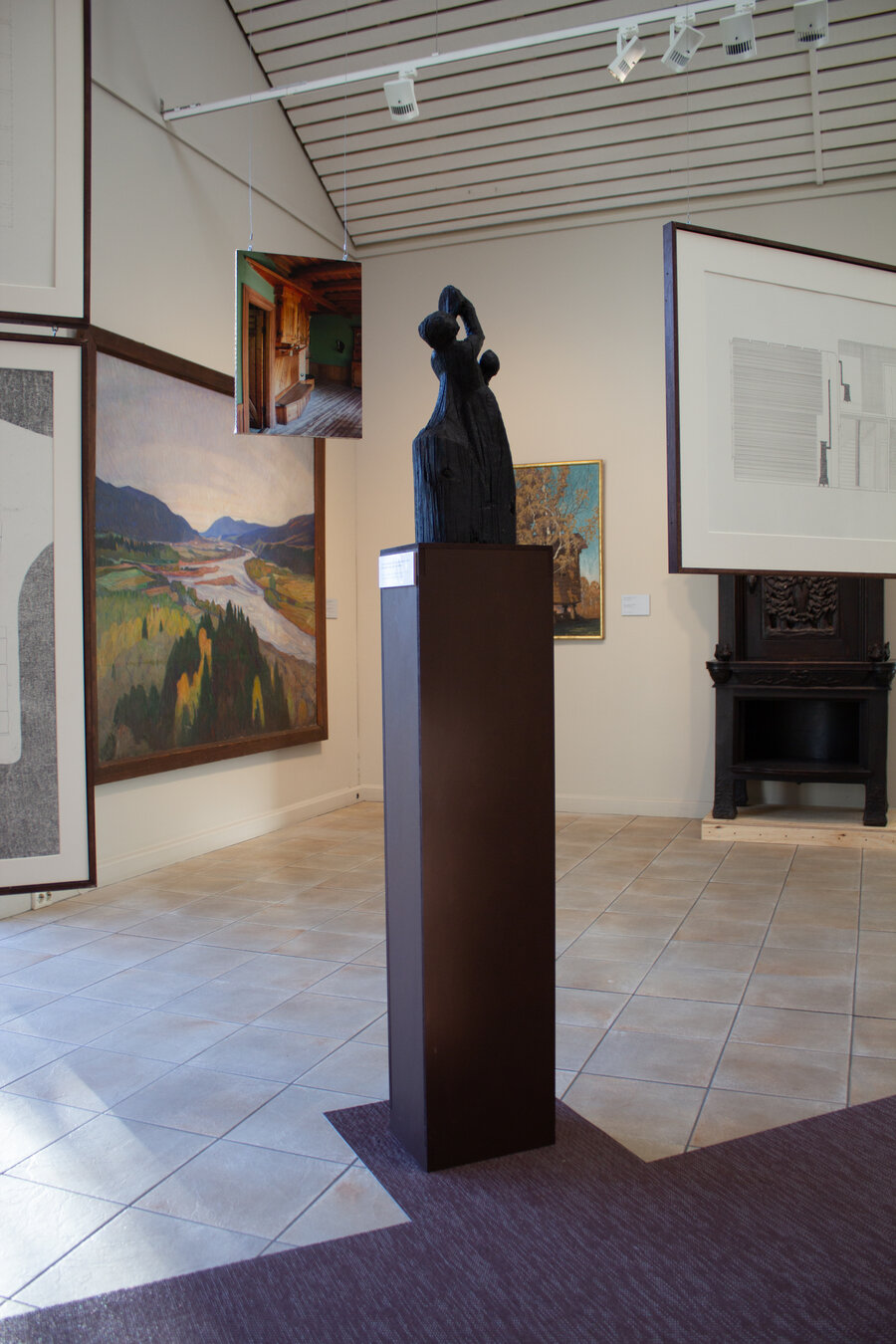
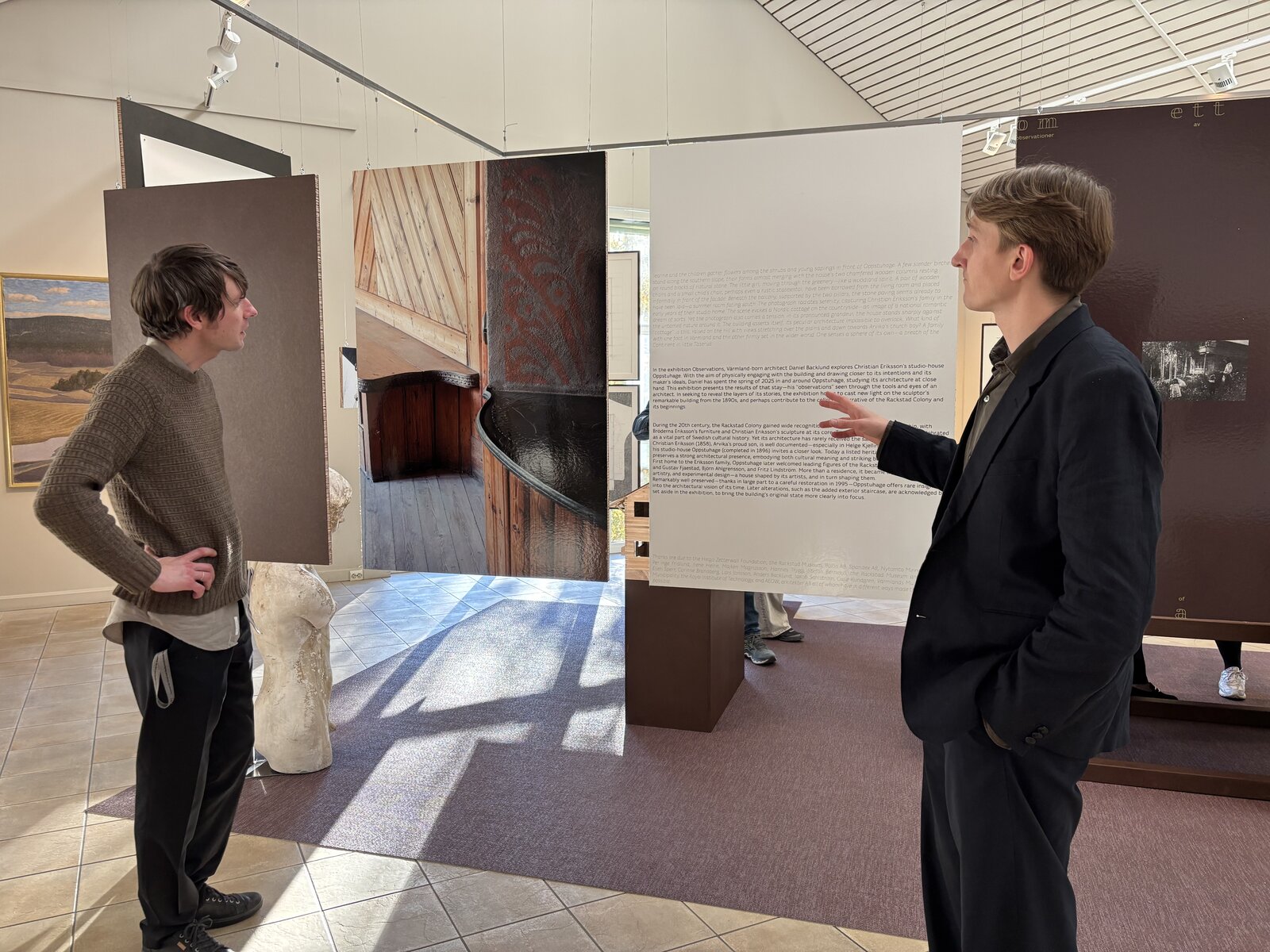
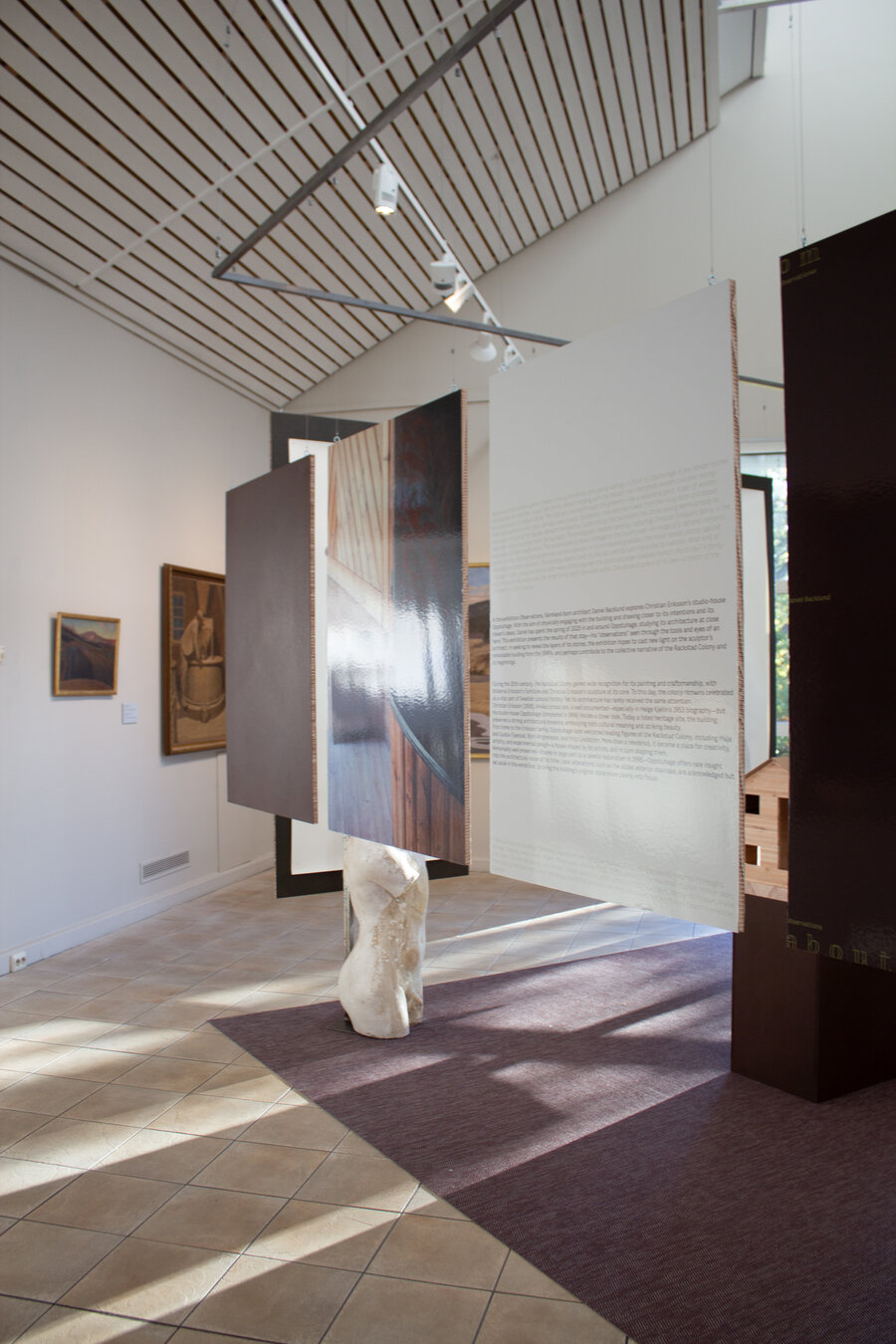
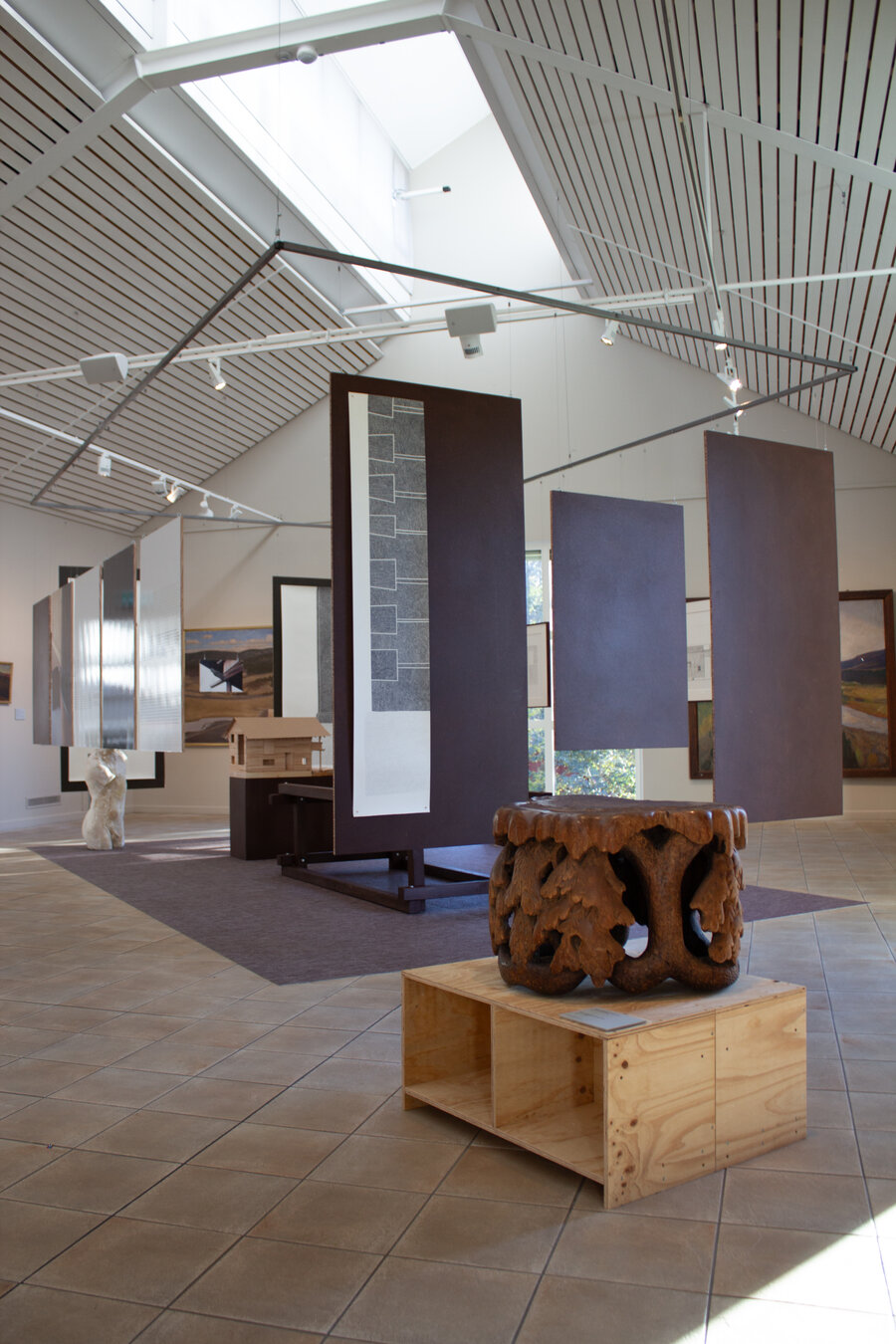
Bolon is proud to contribute to the project “Observations of Oppstuhage,” an initiative led by architect Daniel Backlund. Opening on 18 October 2025 at the Rackstad Museum in Arvika, the exhibition highlights one of Värmland’s most significant pieces of architectural heritage: sculptor Christian Eriksson’s studio, built between 1894 and 1896.
Oppstuhage is one of the cornerstones of what later became the Rackstad Colony. The building is remarkably well-preserved thanks to the careful restoration carried out in 1995. Daniel Backlund’s project explores its architecture and history from new perspectives. Among the unique craft elements in the interior are wood-shingle wallpapers and a jute-cloth wall covering, the latter rewoven by Klässbols Linneväveri as part of the restoration.
In the same spirit, Bolon contributes a contemporary expression of Swedish textile tradition and supports the exhibition with flooring: Botanic Chestnut. Since 1949, Bolon has produced woven products in Sweden, and our factory in Ulricehamn continues the tradition. From weave to weave, from then to now.
What prompted you to begin this project, and what makes Oppstuhage and the Rackstad Colony so compelling to explore?
The artists of the Rackstad Colony remain continuously relevant, and to this day their legacy receives wide attention- perhaps primarily through the painting and craftwork the movement left behind. In many ways, the movement grew out of the unique environment around Arvika at the turn of the last century. This inspiring milieu emerged largely thanks to the presence of the Eriksson Brothers’ furniture workshop and the great sculptor Christian Eriksson, Arvika’s proud son. His studio-home served as the Eriksson family residence but later became home to several key figures of the Rackstad Colony, including Maja and Gustav Fjaestad, Björn Ahlgrensson, and Fritz Lindström. Through its function, the house enabled artistic creation, craftsmanship, and experimental interior art; it became a home to be influenced by and for artists to live and work in. Oppstuhage thus became an anchor for the Rackstad Colony as we know it today. My project delves into the building’s architecture, whose character reveals something about Eriksson’s own ideals as well as the art and architectural discussions of the late 19th century.
Oppstuhage is both an architectural work and a cultural heritage site. How do you safeguard its history while bringing forth new perspectives?
I cannot claim that my project constitutes a significant stewardship of the building. The essential preservation has been carried out by the engagement and care shown by the municipality of Arvika and the non-profit Rackstad Museum and its devoted supporters throughout the years.
My encounter with the building remains a rather personal story about a structure that has powerfully shaped–and continues to shape–its surroundings. With that said, I would be glad if my perspective, through the eyes and tools of an architect, can shed new light on Oppstuhage within a contemporary context. Hopefully, it can contribute to the collective narrative of the Rackstad Colony and its origins.
The building contains many layers of Swedish craftsmanship. What do these details mean to you as an architect and researcher? And where does Bolon come into the picture?
Oppstuhage holds an enormous richness in terms of traditional Värmland craftsmanship and building techniques. I suppose that, due to my own roots in Värmland, it resonates with me in a particular way. I am deeply moved by its architecture, materials, and textures. The braided technique used in some of the surface materials is one of the most striking elements. Therefore, while working on this exhibition, it felt fitting–and important–that the modern components forming the exhibition design should also be grounded in a spirit of craftsmanship. Bolon’s durable and beautifully woven floors fulfilled that condition perfectly. I am delighted that Botanic Chestnut is part of creating a sensory experience in the exhibition space. Its modern tone also provides a suitable contrast and canvas for the representational material of Oppstuhage.
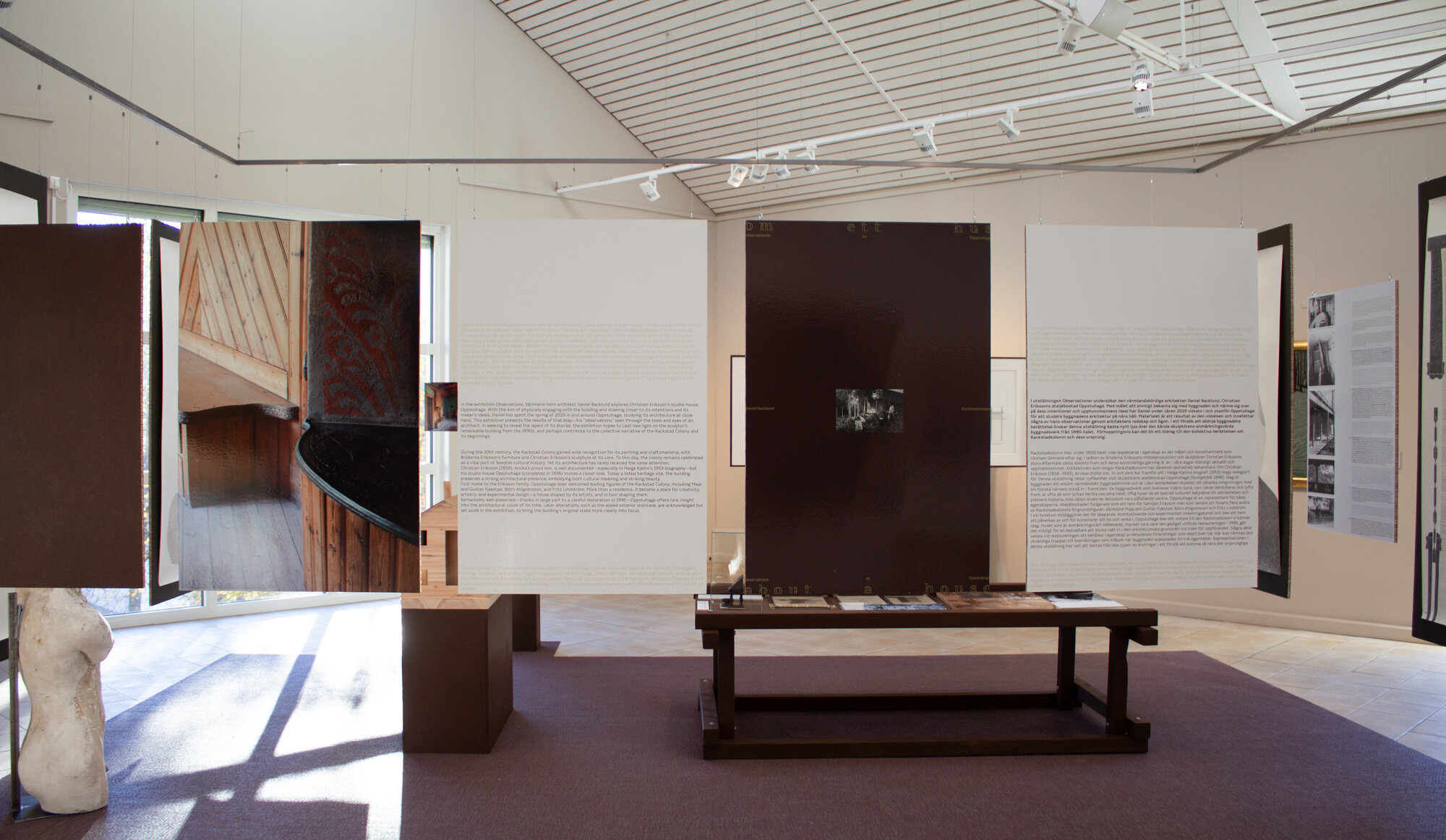
Swedish tradition and craftsmanship run through the project. How do you think an exhibition like this can contribute to today’s conversation about cultural heritage and architecture?
I believe that, for many reasons, we must continually highlight and discuss our shared cultural heritage. A strong collective awareness is essential for ensuring that significant heritage sites are preserved into the future, but cultural heritage is also a constant source of knowledge and inspiration in the creation of the culture we shape today.
This does not mean that older architecture and craftsmanship should necessarily be stylistically replicated, but rather that they can serve as an effective sounding board and backdrop for a world of new ideas. I believe important heritage can and should be presented repeatedly, as new thematic perspectives are always revealed–we can learn a great deal from it.
Photos: Ellen Sperr